

NADI, Fiji, 21 August 2026 — The United Nations Committee for the Promotion and Advancement of Cooperatives (COPAC), in collaboration with the Government of Fiji organized a three-day workshop in Nadi, Fiji focused on strengthening cooperatives through education, training and regional cooperation. The workshop, held from 19 to 21 August, brought together government officials, cooperative leaders, regional organizations and development partners to explore how cooperatives can contribute to inclusive and sustainable development across the Pacific. Discussions focused on cooperative education and training, market access, value addition, agribusiness development and the role of regional partnerships in strengthening cooperative enterprises

Opening the workshop, Fiji’s Deputy Prime Minister, Hon. Manoa Kamikamica, called for stronger regional cooperation to help Pacific countries expand economic opportunities, build local capacity and strengthen communities. Drawing on the Fijian concept of solesolevaki, or working together for the common good, he said cooperatives can help connect small producers to larger markets while ensuring more value remains within local communities.
Kamikamica also highlighted the potential of cooperatives to support small producers by bringing them together, improving access to markets and helping retain greater value within local economies. Referring to India’s Amul cooperative model, he noted how aggregation can help producers reduce reliance on intermediaries and strengthen the position of producers in the value chain.
He also pointed to examples from Fiji, including the New Valley Farmers initiative, which brings together around 7,000 farmers through 20 cooperatives, as an illustration of how cooperative approaches can connect local producers with wider markets. He stressed that regional cooperation could allow Pacific countries and their cooperative movements to work at a scale that individual island economies may find difficult to achieve on their own.
“Regional cooperation allows us to conduct capacity building, touch lives, and transform our communities. Fiji is all in on cooperatives,” Kamikamica said.
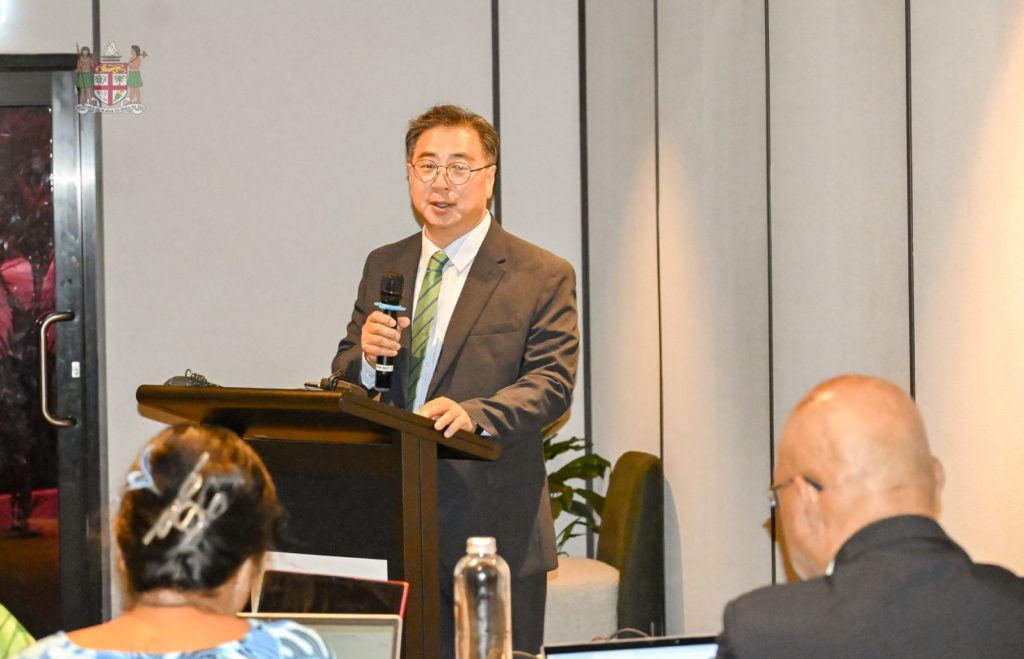
COPAC Chair Ilcheong Yi underscored the long-standing relationship between Fiji and the international cooperative movement, noting that Fiji became independent in 1970 and COPAC was established the following year.
In his opening remarks, Yi reflected on the historical connection between Fiji and COPAC, noting that Fiji became independent on 10 October 1970, while COPAC was established in March 1971. “Independent Fiji and COPAC have travelled more than half a century of cooperative history side by side,” he said.
Yi said successful cooperative development depends not only on strong individual cooperatives, but also on supportive institutions, enabling policies and effective partnerships among governments, civil society, academia and the private sector. He added that the Pacific’s traditions of mutual support provide a strong foundation for building resilient cooperative institutions capable of responding to today’s social and economic challenges.
Yi further emphasized that cooperative development involves translating values such as democracy, reciprocity and solidarity into economic and social realities. He highlighted the importance of a strong cooperative movement with a shared sense of purpose, a connected cooperative sector able to engage with a range of stakeholders, and institutional systems supported by appropriate laws, regulations and capabilities.

Speaking at the opening session, Andrew Allimadi, Social Affairs Officer and Focal Point for Cooperative Affairs at UN DESA, highlighted the longstanding tradition of cooperation in Fiji and across the Pacific, noting that cooperative principles are deeply rooted in the region’s cultures and communities.
He said the workshop comes at an important time as Pacific Island countries face challenges including climate change, geographic isolation, economic vulnerability and youth unemployment. Cooperatives, he noted, can provide practical avenues for collective action, economic participation and community resilience.
Allimadi also linked the discussions to broader international efforts to advance people-centred development following the Second World Summit for Social Development in Doha, emphasizing the importance of strengthening cooperative institutions, skills and partnerships to promote poverty reduction, decent work and social inclusion.

A key focus of the workshop was advancing discussions on the proposed Pacific Island Cooperative Network (PICON), which participants explored as a platform for policy advocacy, technical assistance, resource sharing and regional collaboration. Delegates also discussed priorities for a Pacific Cooperative Action Roadmap aimed at strengthening the cooperative sector across the region.
The workshop concluded with a shared commitment to deepen regional cooperation and strengthen the institutions, skills and partnerships needed to help cooperatives contribute to sustainable development throughout the Pacific.